Posts

For a Lasting Peace in Mindanao (Part II)
Image
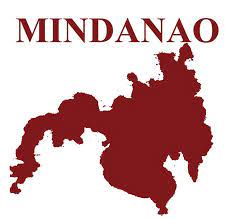
by Sixto Domogen Benguet State University The country’s Muslims …also became victims of government policies, especially over the use of land and resources. For instance, the Philippine Commission Act of 1903 declared null and void all land grants made by traditional leaders without the consent of the Government. All of Mindanao was opened to resettlement programs of homesteaders and the entry of corporations, a discriminatory Public Land Law was likewise implemented which favored homesteaders and corporations.

For a Lasting Peace in Mindanao (Part I)

Image
by Sixto Domogen Benguet State University “Pinoy kapwa Pinoy ang naglalaban doon sa Mindanao…marami ang dugo na dumanak sa lupa ng Mindanao…” This part of the song by Freddie Aguilar speaks about the real situation in Mindanao, which probably started during the Spanish colonization. Today, the situation has become worst because of the fact that conflict and misunderstanding are rampant between and among the constituents of this region.

Democracy, Poverty and Human Development

Image
By Christopher Ryan Maboloc & Gerry Arambala Development, according to Amartya Sen, “can be seen as the process of expanding the real freedoms that people enjoy.” As a matter of principle, it has been argued that democracy is firmly rooted in the way it empowers ordinary citizens to achieve the kind of life that is worthy of their dignity as persons. Sen believes that the just and equitable approach to human progress must be anchored on the capabilities of people. The fundamental freedoms of individuals are intrinsically and instrumentally important for them to be able to choose those things that they have a reason to value.

The Things We Need as a Nation

Image
By Christopher Ryan Maboloc         In his book, Philippine Institutions , the Jesuit John Carroll writes that Filipinos aspire for a higher standard of living, but such has become a story of unmet expectations. Despite the rapid economic expansion over the years, of the 50 million members of the labor force in the country in 2015, around 6.5 million are either unemployed or underemployed, according to the National Economic Development Authority. Today, this country has become too polarized, but what is more injurious to our solidarity as a people is that millions of poor Filipinos are still awaiting salvation from the dark pits of poverty.

The Moral Option in the West Philippine Sea

Image
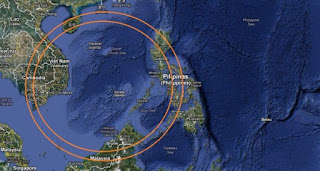
by Christopher Ryan Maboloc The West Philippine Sea enunciates the very difficult situation of the Philippines in the midst of China’s economic and military might in our multipolar world. But our option must be moral, not just political. The Permanent Court of Arbitration in The Hague may have truly dealt a death blow to China’s expansionist claims in the disputed territory, but what is apparent still in the aggressive stance of China is its onerous plan to control the seas and the airspace above it. Chinese political posturing in those waters, as manifested by its calculated readiness to throw its weight on a hapless neighbor, means that China wants to send out the message that it wants to be known as a dominant player in the new global order.

Moral Education and Peace in Muslim Mindanao

Image
By Dr. Romulo Bautista The induction by birth into a family means exposure to the ideas and ideals, traditions, cultural values and practices, and standards of that family. The family is the initial school of moral education and it is recognized as such by Article II, Section 12 of our Constitution which declares that the State shall protect and strengthen the family as a basic autonomous social institution and the natural and primary duty of parents in the rearing of the youth for the development of moral character. The moral education in the family is mostly grounded in the informal structures of cultural values and practices, such as but not limited to, nepotism, padrino system, palusot, manana habit, ningas cogon, hard-work and loyalty, resourcefulness and adaptability, pakikiramay, utang na loob, and palabra de honor Many of these values and practices remain rooted in the students, which they carry later in their professional, political, entrepreneurial, or business practices....

The Social Phenomenon of War in Democracy

Image
By Dr. Romulo Bautista This paper is about war in general and in particular war in Muslim Mindanao, from the standpoint of the Philippine Constitution. Human history until the end of World War II is replete with armed conflicts which did not effectively threaten the existence of planet Earth or the continuity of the human race because there were survivors on both sides of the warring people. But contemporary war with weapons of mass destruction is qualitatively a new phenomenon. We could no longer use the conventional terms homicide or genocide to describe a nuclear war which is .capable of wiping out not only the existing human values, but the very possibility of creating any further human values. We must, therefore, invent the term biocide to describe the killing off, at one stroke, of all forms of life – plant, animal, and human. Such is the technical possibility which has now emerged in the development of nuclear weaponry. We must confront this threat of war in democracy. ...