Posts

What is Wrong with the Philippines?

Image
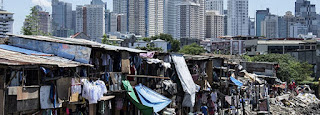
by Christopher Ryan Maboloc Ateneo de Davao University                                      Living in a poor country where hunger is the face of many people’s state of affairs, I have seen the terrible reality of human life which truly makes one doubt whether poverty can vanish from the earth. Inequality is a hard fact of life. About 25 years ago, fish was abundant in my beloved barrio, so they put a fishing port in the 90s. More than a decade has since gone by, and all the fishes have disappeared. They said the port will make the lives of people better, but after all, Fr. Pete Lamata of Davao City's Social Action Center was right in opposing the fish port. I have not understood him then. Right now I do. A hell lot of people in my barrio are still poor.

The Two Principles of Justice

Image
by Aimee Mesiona ADDU Graduate Student                                 The two principles of justice are the two fundamental philosophies that would constitute justice as fairness. According to Rawls, these are the two basic principles of a fair conception of justice that we would come up with as result of employing the veil of ignorance in the original position. These two principles should be the core rules that regulate how the basic institutional arrangements and agreements of society will distribute what he calls social primary goods, most essential of which are people’s rights, liberties, powers, opportunities, income and wealth.

The Minimal State and its Justification

Image
by Eugim Migue ADDU Graduate Student                                         Robert Nozick acknowledges the superficiality of Kant’s dictum, at least in political philosophy. For him Kant’s strict dictum, “to treat a person not simply as a means,” is quite problematic: it simply is not possible; if we religiously practice it, a gross limitation, if not the total end, to all economic and social transactions is achieved. What Nozick thinks appropriate for political philosophy as its subject, and for any state as its ultimate purpose, is to specify the ways in which using a person is permissible. But here Nozick was quick to point out that there are certain demands which are unquestionably impermissible for a state to ask of its citizens, e.g., getting some citizens to aid others, asking the rich to share his wealth, to be a “sacrificial lamb” to achieve a greater purpose, and so on. The ...

The Call for Social Democracy

Image
By Hadji Balahadja Ateneo de Davao University                                   The NBN-ZTE controversy and the problematic testimony of "Jun" Lozada are actually the latest and relatively severe symptoms of the decay of a liberal democracy dominated by traditional politicians. They manifest the ripening of the evils of liberal democracy in a pre-existing situation of grave social inequality.

ZTE and Philippine Democracy

Image
By Christopher Ryan Maboloc Ateneo de Davao University                                         From a descriptive point of view, the call for social democracy is right. There is corruption in government, bad leaders and the same genes are in power. From a prescriptive point of view, I think the solution lies somewhere else. Not in politics. Not even in changing the system of government. Democracy is only instrumental to people's freedom; it is not freedom in itself. Democracy, at best, in the way it is practiced in the Philippines, in our dear country, secures only, through mass protests, the negative rights of people, i.e. freedom from an oppressive government, freedom from corruption, freedom from violence, etc. But, at the end of the day, when JDV wakes up in the morning, when GMA reads "There's the Rub" in the Inquirer, still, they'll be sitting in their verandas, their coffee serv...

There is a Solution Now

Image
By Orlando Ali M. Mandane Jr., Ph. D University of San Carlos                                     I write this article as a reply to my colleague, perhaps not only to stimulate discussion but also to help find that solution wherever it lurks. I agree with Ryan Maboloc with regards to a possible hopeless scenario: at the end of the day JDV and GMA will savor their comfortable life served in china—pun intended. And, I agree that a common tao may wake up and ask: "unsa ug asa ko mangita ug pamahaw para sa akong lima ka anak?" (Loosely: where can I find breakfast for my five kids?) I disagree to his interpretation.

ZTE, Education and Action

Image
By Orlando Ali Mandane, Ph.D University of San Carlos                                    The economic facts lay bare before us the harsh reality of our social life: a great majority of the Filipinos share the same economic misery. The high economic growth rate of 7% only means for this country a number to brag, not something to be proud of. Surely, numbers are an inexact representation of our true condition. But in a way, these numbers reveal what policy makers cannot obfuscate: for millions of Filipinos, GDP growth rate does not ring a bell to them; it does not metamorphose into buwad (dried fish) or tinapa (sardines).